If you're comparing prices, you're not comparing standards.

What’s The Darkest Legal Window Tint In Colorado?
Want to make sure you don't get a ticket for tint? Let's explore what is and isn't legal in Colorado for tint.
WINDOW TINT
Jay Latona
10/21/20255 min read
Understanding Colorado Window Tint Laws and Windshield Tint
Updated for 2026
Window tint is one of the best upgrades you can do for comfort, privacy, and heat control. It is also one of the easiest ways to get ticketed if you pick film percentages based on vibes instead of the actual law.
This guide breaks down what Colorado allows, what it does not, and how to get the benefits of tint without turning your windshield into a legal liability.
What “percent” tint actually means (VLT)
Tint “percentage” is VLT: Visible Light Transmission. It is how much visible light passes through the glass plus the film.
Higher number = lighter tint = more legal
Lower number = darker tint = more privacy = more likely to get you pulled over
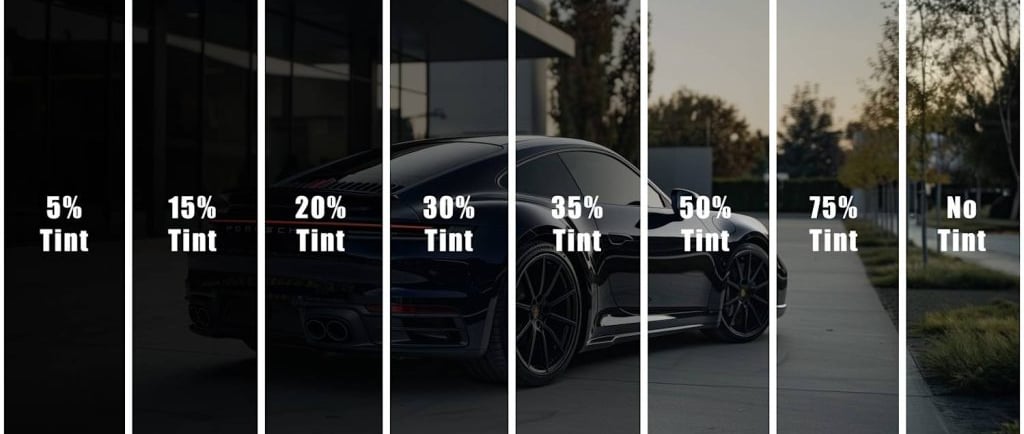
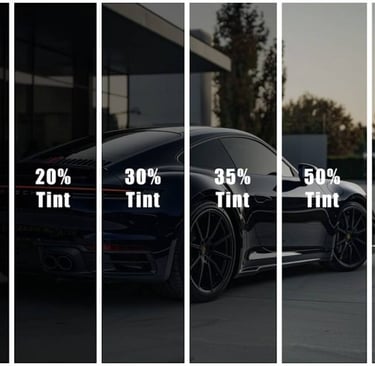
Quick visual reference (approximate feel)
70 percent: looks nearly clear, most people will not notice from outside
35 percent: mild privacy, still easy to see inside during the day
27 percent: noticeably darker, often the darkest legal target for front windows in Colorado
20 percent: strong privacy, common “factory privacy glass” look on SUVs
5 percent: “limo tint” dark, typically not legal on most vehicles under Colorado’s rules
The actual Colorado law (the numbers that matter)
Colorado’s tint requirements are in C.R.S. 42-4-227.
Windshield
Your windshield must allow at least 70 percent light transmittance.
What that means in real life
Most factory windshields are not 100 percent VLT. If you add a “70 percent film,” your final measured VLT is usually lower than 70 once it stacks with the glass. So “70 percent film” does not automatically equal “70 percent legal.” The only way to know is to meter it.
The law also allows a nontransparent sun strip at the very top of the windshield, with specific limits:
a) Bottom edge can extend no more than 4 inches down from the top of the windshield
b) It cannot be red or amber
c) It cannot distort your vision or include lettering that obstructs vision
d) It cannot reflect glare into other drivers’ eyes more than the windshield normally would
Practical takeaway
The safest, lowest-drama option is a top sun strip that stays within the 4-inch limit. A full windshield film is only legally safe if your final measured VLT is 70 or higher.
Side and rear windows (the 27 percent rule)
For windows other than the windshield, Colorado generally requires at least 27 percent light transmittance.
Important exception that most people miss
Colorado law has a conditional exception allowing windows behind the driver (rear side windows and rear window) to be darker than 27 percent, but only if BOTH of these are true:
a) The front side windows allow at least 70 percent light transmittance
b) The windshield allows at least 70 percent light transmittance
Translation
If you want very dark rear tint and you want to be strictly within the statute, your front windows and windshield must stay extremely light. For a lot of vehicles, that basically means “nearly untinted,” and it must still meter at 70 or above.
Factory privacy glass and why it confuses everyone
Colorado law allows OEM glass that was installed at the time of manufacture if it is federally compliant. That is why many SUVs have darker rear glass from the factory.
But stacking additional film on already-dark privacy glass can push the effective VLT even lower, which can create compliance risk depending on how the vehicle meters and how an officer interprets “treated with material” under the statute. The clean way to handle this is to meter the windows after install and choose film accordingly.
Reflective and mirrored films
Colorado does not allow any window film that presents a metallic or mirrored appearance.
If your tint looks like a chrome mirror or throws obvious glare, it is the kind that gets attention fast.
Windshield tint legality in Colorado (clear answer)
Legal
A top sun strip up to 4 inches down from the top, following the color and glare rules
A full windshield film only if the windshield still meters at 70 percent VLT or higher after installation
Not worth gambling on
Anything that drops the windshield below 70 percent VLT. That includes the common “50 percent windshield” trend. If it meters under 70, it is not compliant.
How tickets typically work (and what it can cost)
Colorado treats tint violations under 42-4-227 as traffic infractions, and it distinguishes between the driver and the installer:
Driving with illegal tint is generally a class B traffic infraction
Installing tint that does not meet the requirements of subsection (1)(a) is a class A traffic infraction
Colorado’s penalty assessment schedule lists a 50 dollar penalty assessment (plus a listed surcharge amount) for 42-4-227, but real-world totals can vary by jurisdiction and whether it ends up in court.
Medical exemption myth check
A lot of blogs claim Colorado offers a medical exemption for darker tint. The tint statute itself (C.R.S. 42-4-227) does not describe a medical exemption process.
I also could not find a Colorado DMV “tint waiver” form listed on the Colorado DMV forms index (which is where they publish official DMV forms).
If someone tells you “my doctor wrote a note so I can run limo tint,” do not treat that as automatically valid. If you have a legitimate medical need, the smarter play is:
Stay legal with VLT while maximizing UV and heat rejection using high-performance films
Get everything metered and documented
If you want to pursue a waiver claim, verify it through an official state source before assuming it will protect you during a traffic stop
Out-of-state vehicles visiting Colorado
If you are registered outside Colorado but driving in Colorado, a separate bill (HB19-1067) addressed minimum light transmission requirements for out-of-state vehicles operated in Colorado. If you travel often or have an out-of-state plated vehicle here, do not assume your home-state tint is automatically fine.
What we recommend for a “looks good, feels good, stays legal” setup
This is the setup that minimizes risk while still giving the benefits people actually want.
Option 1: Clean and compliant for most vehicles
Front side windows: 27 percent VLT film (or slightly lighter if you want extra safety margin)
Rear side windows and rear window: 27 percent VLT film, unless your vehicle meters 70 percent or higher on the windshield and front sides and you are intentionally using the rear exception
Windshield: top strip only (within 4 inches), OR a full windshield film only if it meters 70 percent or higher after installation
No reflective or mirrored films
Option 2: Maximum heat rejection with minimal legal drama
Use the lightest high-performance film on the windshield that still meters 70 percent or higher after installation
Pair it with legal front window tint (27 percent or lighter)
For privacy, rely on rear glass that is within the statute, plus interior solutions when parked (shades, cargo covers), instead of gambling on ultra-dark rear tint that fails the front-and-windshield 70 percent condition
How J9's Luxury Auto Detailing keeps clients out of trouble
We meter before and after, because guessing is how people pay twice
We prioritize high-clarity films that reject heat without going illegally dark
We will tell you “no” if what you want is a guaranteed ticket magnet
Key takeaways
Colorado requires at least 70 percent VLT on the windshield and at least 27 percent VLT on other windows in general.
The windshield sun strip is allowed only at the top, within a 4-inch limit, with specific restrictions.
Darker-than-27 rear tint is only allowed under a strict condition: your front side windows and windshield must each be at least 70 percent VLT.
Metallic or mirrored appearance films are not allowed.
If you want the benefits without the legal risk, meter everything and choose films based on measured VLT, not the box label.
References (URLs)
Colorado Revised Statutes Title 42 (2024 PDF): https://leg.colorado.gov/sites/default/files/images/olls/crs2024-title-42.pdf
HB19-1067 bill page: https://leg.colorado.gov/bills/hb19-1067
Colorado DMV forms index: https://dmv.colorado.gov/forms-number-order
J9's Luxury Auto Detailing Colorado Springs - Ceramic Coatings, Clear Bra PPF, Vinyl Wrap, Tint
East Address
6314 Ford Street Colorado Springs, CO 80915
© 2026 All Rights Reserved | J9's Luxury Auto Detailing
Hours:
Monday: CLOSED
Tuesday through Friday: 8 AM to 6 PM
Saturday and Sunday: 9 AM to 5 PM
Window Tint Expectations
PPF
Expectations
Displayed prices reflect our cash discount.*
Need Financing? Click Here
Paint Chip